There are mornings when I move directly from an early training session into a day of meetings, decisions and complex work.
On the good days, the transition feels natural. My body responds, my thinking is clear and there is enough capacity for both.
After a poor night’s sleep, I can still do everything the day requires.
It just costs more.
At this stage of my life, I am still asking a great deal of myself.
I work in a demanding role as General Manager, AI Transformation at Aspen Medical. Much of my day is spent thinking about complex systems, emerging technology and the decisions organisations need to make about both.
I am also still competing at elite Masters level in Touch Football.
Those two worlds look very different. One tests the quality of my thinking. The other tests the capacity of my body.
Sleep affects both.
I notice it more now than I did when I was younger. Not because sleep has suddenly become important, but because the margin for ignoring it has become smaller.
At this stage of my life, sleep is not simply recovery from what I have done. It is part of the capacity I need for what I am still choosing to do.
What the data is making visible
For most of our lives, sleep was largely invisible.
We went to bed. We woke up. We made a judgement based on how we felt. We might have described the night as good, restless or simply not long enough.
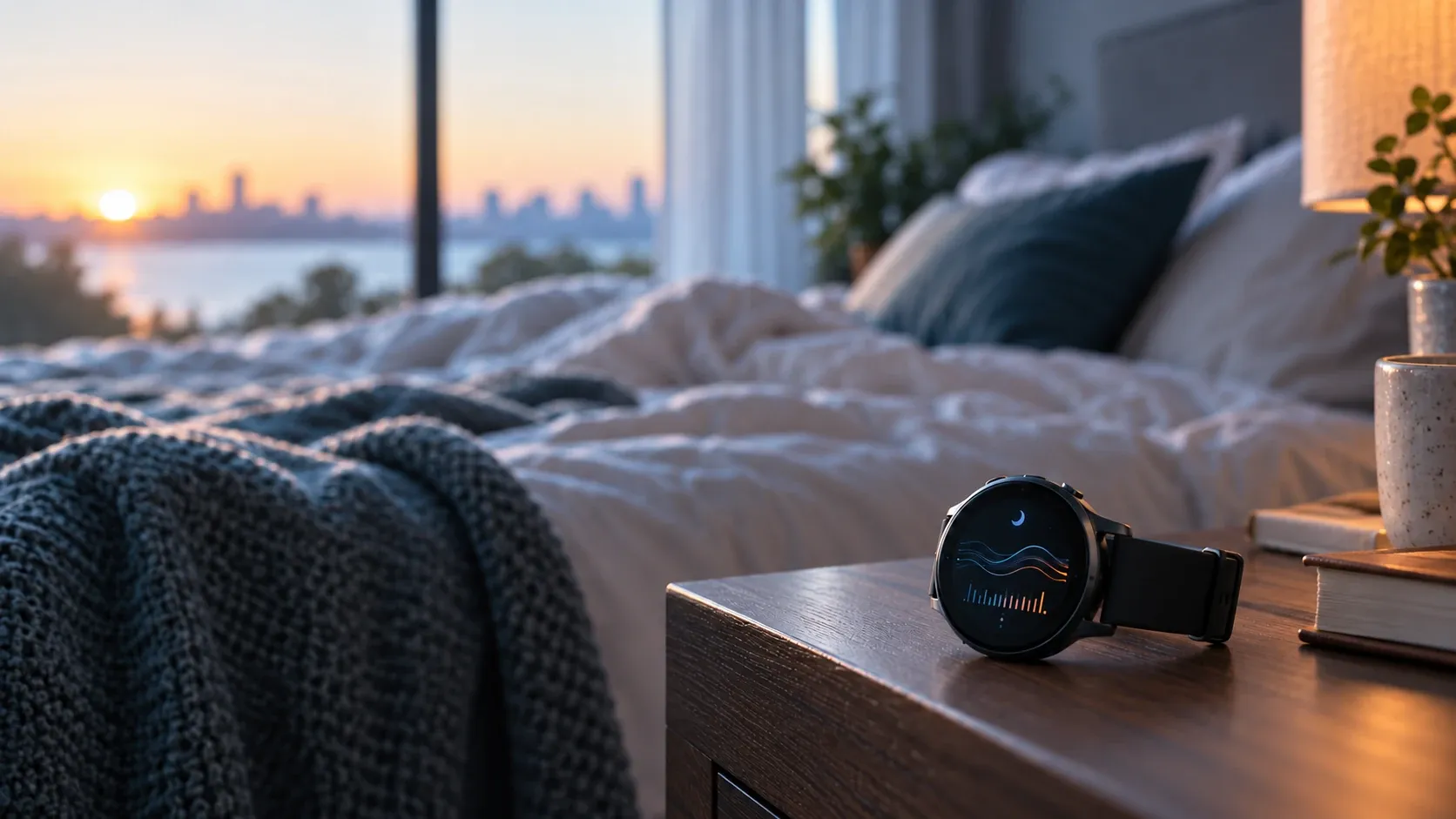
Today, a device worn on the wrist can give us a much more detailed account.
Sleep duration. Sleep consistency. Resting heart rate. Heart rate variability. Breathing rate. Skin temperature. Blood oxygen. Recovery.
Before we have properly started the day, an algorithm may have already decided how well we slept and how ready we are for what comes next.
A recent article by Peta Bee in The Australian, titled Data-backed sleep and health secrets from ‘bulletproof’ scientist, brought the scale of this shift into focus.
The article profiles Dr Kristen Holmes, principal scientist and global head of human performance at Whoop. Through her role, Holmes works with biometric data covering the sleep, circadian rhythms and exercise behaviours of up to three million Whoop members.
That is more than an unusually large collection of information.
It is a glimpse into the emerging infrastructure of human health.
The scale of the data creates enormous research value. It should also be interpreted with an awareness that it comes from users of a commercial platform whose population may not represent everyone.
The strongest conclusions will continue to require independent research across different devices, populations and health conditions.
Even with that qualification, something significant is happening.
The body has always been producing the data. Wearables are making more of it visible.
Sleep and the capacity to perform
One of the most confronting findings discussed in the article relates to sleep debt.
Sleep debt is the difference between the amount of sleep we need and the amount we receive. It is easy to dismiss a small deficit as insignificant. Forty-five minutes does not sound catastrophic.
Yet the research discussed in the article found that sleep debt of approximately 45 minutes was associated with a 5 to 10 per cent decline in measures related to planning, monitoring and achieving goals.
That is not simply feeling tired. It is reduced executive capacity.
This matters in my work because AI transformation is not primarily a technology challenge.
It is a thinking challenge.
Leaders are being asked to process more information, understand unfamiliar systems and make decisions in environments that are changing around them. They need to determine what technology can do, what it should do and where human judgement must remain central.
That requires cognitive headroom.
A person experiencing sleep debt may still attend every meeting, answer every message and complete every task. From the outside, they may appear fully functional.
But their capacity to prioritise, exercise judgement and regulate their response to pressure may already be diminished.
The person is still performing. They are simply performing with less available capacity.
Multiply that across a workforce and sleep becomes more than an individual health issue. It begins to influence decision quality, communication, safety, productivity and leadership behaviour.
Sleep is not separate from organisational performance. It is part of the infrastructure supporting it.
From general advice to personal evidence
Most people already know the basic advice.
Sleep consistently. Exercise regularly. Avoid eating too late. Be careful with alcohol. Reduce artificial light at night.
The challenge is rarely a complete lack of information. The challenge is making that information personally relevant.
Wearable data changes that relationship.
It can show someone what happens to their recovery after a late meal. It can reveal how alcohol affects their resting heart rate and heart rate variability. It can make the effect of an inconsistent bedtime visible.
The article provides a clear example.
According to Holmes, Whoop data indicates that one alcoholic drink within two to three hours of sleep can reduce overnight recovery by 4 to 5 per cent. Three glasses of wine can produce a much larger decline.
The recommendation to limit alcohol is not new. The personal feedback is.
‘Alcohol may affect sleep’ is general health advice.
‘My recovery falls every time I drink late in the evening’ is personal evidence.
That shortens the distance between behaviour and consequence.
It is where wearable technology can become a useful behaviour-change tool. It does not simply tell us what should work. It allows us to observe how our own bodies appear to respond.
But the most useful information rarely comes from one night.
One reading is information. Repeated readings create a pattern. The pattern is where the value sits.
From personal insight to health infrastructure
Traditional healthcare has often relied on snapshots.
A consultation. A blood test. A blood pressure reading. A sleep study conducted on a particular night.
These measures remain essential. They offer clinical depth and diagnostic expertise that consumer devices cannot replace.
Wearables offer something different. They make more of the space between those clinical moments visible.
Over time, continuous information can help establish an individual baseline. It may show when sleep consistency is declining, resting heart rate is increasing, activity is falling and recovery is becoming less stable.
Each measure on its own may mean very little. Together, and viewed over time, they may indicate that something in the person’s wider system has changed.
Artificial intelligence will make these relationships easier to identify.
Today, a wearable might tell someone that they slept poorly.
Increasingly, connected health systems may be able to recognise that several measures have changed together. They could identify a developing pattern, recommend a small adjustment or suggest that professional advice may be appropriate.
That does not necessarily provide a diagnosis. It provides an earlier question.
This distinction matters.
The opportunity is not simply a better sleep score. It is a better support system around the person.
But we should be careful not to turn sleep data into another way of blaming people for the conditions around them.
Not everyone has equal control over their routine.
Shift work, caring responsibilities, travel, financial stress, workplace expectations and family circumstances can all affect someone’s capacity to maintain consistent sleep.
A worker on a rotating roster does not have a sleep-consistency problem in isolation. They may have a work-design problem.
A leader answering messages late into the night may not need another article explaining the importance of sleep. They may need clearer organisational boundaries.
Wearable data can help make these patterns visible. Organisations must resist using that information to hold individuals responsible for conditions created by the system around them.
If sleep influences safety, decision-making, emotional regulation and performance, then workload, rostering, leadership expectations and communication practices are also part of the conversation.
Wellbeing cannot sit only with the individual. It must be designed into the system.
When measurement begins to work against us
The potential of wearable health is significant, but so are its limitations.
Consumer wearables do not observe sleep in the same way as a clinical sleep study. They use signals such as movement, heart rate and temperature to estimate what is happening.
They are generally better at determining whether someone is asleep or awake than accurately identifying individual sleep stages. The technology continues to improve, but a precise-looking score can still be produced from an imperfect estimate.
Precision can create an illusion of certainty.
A device might report a specific amount of deep sleep. The number looks authoritative. But it remains an algorithmic interpretation of physiological signals rather than a direct measurement of brain activity.
That does not make the data worthless. It means we need to understand what kind of information it is.
Data can tell me that something has changed. It cannot always tell me why.
There is also a human risk.
Someone may wake feeling reasonably rested, check their recovery score and discover that the device disagrees. Suddenly, they feel less prepared for the day. They reconsider their training, worry about their health or carry a sense of fatigue that was not present before they checked the number.
The data begins to override the experience.
This preoccupation with achieving ideal sleep data has been described as orthosomnia. The pursuit of the perfect score creates anxiety, and that anxiety can interfere with the sleep the person is trying to improve.
I have seen versions of this throughout sport.
Measurement is useful until the athlete begins serving the metric.
Once the number becomes the objective, we can lose sight of what it was designed to support.
The best use of wearable data is not to outsource our judgement. It is to improve the quality of our attention.
Better data still requires human judgement
The other significant risk is what happens to the information itself.
Wearable data is deeply personal.
Over time, it can reveal when we sleep, how we move, how our bodies respond to stress and whether aspects of our health may be changing.
Who owns that information? Where is it stored? Who can access it? Could it influence employment, insurance or healthcare decisions?
These questions become particularly important when wearables are introduced through workplace wellbeing programs.
An organisation may begin with a genuine desire to support its people. But if individual physiological information becomes available to managers, insurers or performance systems, its purpose has changed.
Health data can quietly become employment data.
That boundary must be protected.
Participation should be genuinely voluntary. Consent should be informed and easily withdrawn. People should understand what is being collected, how it will be used and what will never be done with it.
Trust is not a privacy statement hidden inside an application. It must be designed into the system.
I remain optimistic about the future of wearable health.
Sensors will improve. AI will identify patterns we currently miss. Individuals may gain a clearer understanding of the behaviours shaping their sleep, recovery and long-term wellbeing.
But more data will not automatically make us healthier.
Better measurement requires better judgement.
For me, that means using four simple principles.
Follow trends, not individual scores
One unusual night is rarely a reason to change everything. The value is in patterns across weeks and months.
Combine data with lived experience
Energy, mood, concentration and physical readiness still matter. The data should deepen self-awareness, not replace it.
Treat insights as prompts, not diagnoses
A wearable can identify something worth exploring. Persistent fatigue, breathing concerns, significant sleep disruption or sustained physiological changes require appropriate professional advice.
Understand the data arrangement
Know what is being collected, where it is stored and who can use it. Convenience should not require the quiet surrender of control over personal health information.
What we do with what we can now see
I intend to continue asking a great deal of myself.
I still want to perform well in a demanding role. I still want to compete, train and recover at elite Masters level. Wearable data can help me understand what supports that capacity and what quietly depletes it.
But the technology needs to remain in its proper place.
It is evidence. Not identity.
It can help me recognise a pattern. It cannot decide how I feel, what matters to me or what I should value.
The future of wearable health will not be determined only by how much data we can collect.
It will be determined by whether that data helps us make better decisions about how we live, work and recover.
Sleep was always shaping our capacity.
We can simply see more of it now.
What matters is what we choose to do with what has become visible.